

Standing in front of your closet on a busy morning, you want something that feels good, looks sharp, and matches both your values and your lifestyle. That is where knitwear stands apart from standard casual pieces. Its unique structure lets air and moisture move through easily, making it the easy choice for comfort and breathability during urban commutes or evening gatherings. Discover how the blend of craftsmanship, sustainable materials, and modern design makes knitwear a smart and adaptable option for every season.
Table of Contents
- What Knitwear Is and How It’s Made
- Different Types of Knitwear Materials
- Key Qualities: Comfort, Style, Versatility
- Sustainable Knitwear and Handmade Appeal
- Knitwear Vs. Other Streetwear Choices
Key Takeaways
| Point | Details |
|---|---|
| Understanding Knitwear | Knitwear is made from continuous yarn, creating a breathable and comfortable fabric ideal for various weather conditions. |
| Fiber Selection | Choosing the right fiber composition impacts comfort, style, and garment longevity. Look for natural fibers for breathability and synthetics for durability. |
| Sustainable Practices | Prioritize sustainable and handcrafted knitwear to minimize environmental impact and support ethical labor practices in production. |
| Versatility | Quality knitwear adapts seamlessly to different occasions, making it a smart investment for a versatile wardrobe. |
What Knitwear Is and How It’s Made
Knitwear is fundamentally different from woven textiles. Instead of interlocking two sets of yarns, knitwear creates fabric from a single continuous yarn by forming interlocking loops called rows. These rows link together vertically, building the entire fabric from top to bottom in a continuous process.
[Knitwear fabrics and garments] are created directly from yarn without the weaving process, making them naturally breathable, absorbent, and easy to care for. This simple distinction explains why knitwear feels different against your skin compared to woven cotton or linen—the structure allows air and moisture to move through more freely.
How Knitwear Gets Made
Production ranges dramatically depending on the method and scale:
- Handmade and artisanal: Craftspeople create knitwear using needles in cottage industries and small studios, preserving traditional techniques
- Industrial scale: Modern facilities use computer-controlled knitting machines for consistent, precise production
- Fully fashioned: Items are engineered directly at the knitting stage to fit properly, minimizing fabric waste
[Continuous yarn transformation] happens through specialized machines that convert yarn into patterned fabric with digital precision. This blend of craftsmanship and high technology means knitwear design requires both creative vision and technical expertise to innovate effectively.
Fully fashioned knitwear is engineered during the knitting process itself, not cut from larger pieces—this precision reduces waste and improves fit significantly.
Common knitwear products include sweaters, cardigans, turtlenecks, and hosiery. Each type requires different machine settings, yarn weights, and stitch patterns to achieve the desired look and performance characteristics.
Pro tip: Look for fully fashioned knitwear when shopping—it typically fits better, lasts longer, and comes from more efficient production that wastes less fabric.
Different Types of Knitwear Materials
The material you choose for knitwear determines how it feels, performs, and lasts. Different fibers bring their own strengths and weaknesses, so understanding what goes into your sweater or cardigan helps you make smarter purchasing decisions.
Natural Fibers
Natural fibers remain the gold standard for comfort and breathability. Wool regulates temperature naturally, keeping you warm without overheating, while cotton provides lightweight comfort for warmer seasons. These materials allow your skin to breathe, making them ideal for all-day wear.
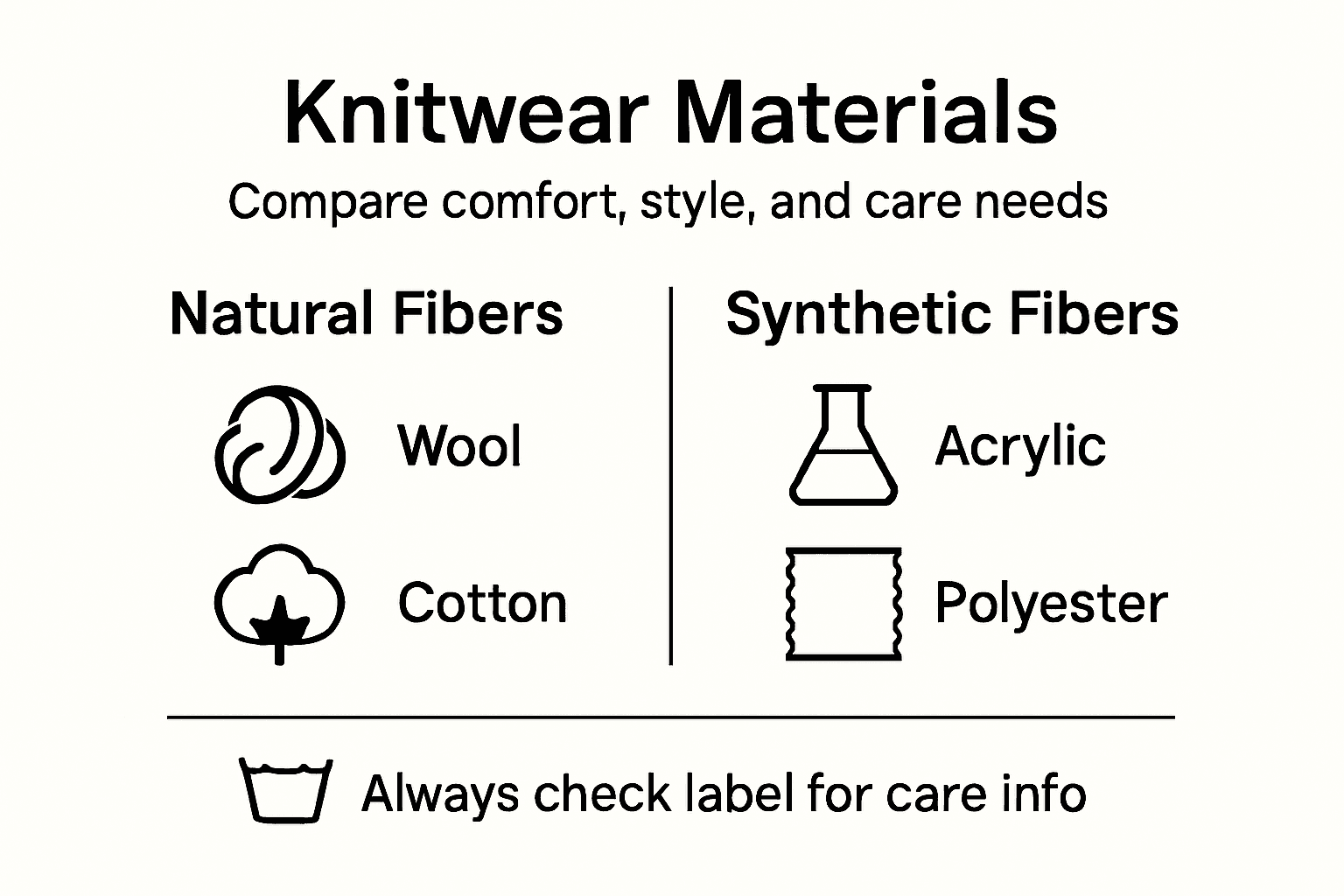
Merino wool deserves special mention—it’s softer than regular wool, naturally odor-resistant, and works well for active lifestyles. Cashmere offers luxury softness but requires careful maintenance and investment.
Here’s a comparison of common knitwear fiber types and their unique benefits:
| Fiber Type | Main Benefits | Ideal Uses |
|---|---|---|
| Wool | Warmth, moisture wicking | Cold weather basics |
| Cotton | Lightweight, breathable | Spring and summer layering |
| Modal | Softness, sustainability | Everyday sweaters |
| Acrylic | Durable, easy care | Machine-washable garments |
| Cashmere | Luxury, extreme softness | Special occasion knitwear |
| Merino Wool | Odor resistance, softness | Activewear and layering |
Regenerated and Synthetic Fibers
[Regenerated fibers like modal] provide softness and sustainability by transforming wood pulp into yarn. They’re often blended with natural fibers to reduce costs while maintaining comfort. Synthetic fibers like acrylic add durability and easy care, making them practical for everyday knitwear.
Many modern pieces blend multiple fiber types:
- Wool blends: Mix natural warmth with synthetic durability
- Cotton blends: Combine breathability with stretch and recovery
- Modal blends: Balance sustainability with affordability
- High-tech synthetics: Engineered for moisture-wicking and performance
How Fiber Composition Affects Your Sweater
[Fiber composition, yarn construction, and knit structure] directly influence elasticity, warmth, and overall appearance. A 100% wool sweater will feel and drape differently than a wool-acrylic blend, and that’s by design.
The material inside your knitwear determines whether it’ll stretch out after a few washes, pill easily, or maintain its shape for years.
Different applications call for different materials. A turtleneck worn close to your skin might use merino wool for temperature regulation, while a loose cardigan could use modal for breathability and movement.
Pro tip: Check the fiber content label and care instructions before buying—natural fibers often need hand washing, while synthetic blends offer machine-washable convenience, saving you time and effort over the garment’s lifetime.
Key Qualities: Comfort, Style, Versatility
Knitwear succeeds because it delivers three things simultaneously: how it feels, how it looks, and how it adapts to your life. For urban professionals juggling work, social events, and weekend hangouts, this triple threat matters more than ever.
Comfort That Actually Works
Comfort in knitwear isn’t just about softness. [Fiber blend and knit structure] directly affect how the fabric regulates temperature, manages moisture, and allows air to flow through. A merino wool cardigan breathes differently than a cotton blend, and that difference determines whether you’re comfortable sitting in an air-conditioned office or walking outside on a cool evening.
The right knitwear adapts to your body and environment:
- Thermal regulation: Wool maintains warmth without overheating; cotton stays cool
- Moisture management: High-quality blends wick sweat away from skin
- Air permeability: Loose knit structures breathe better than dense ones
- Stretch and recovery: Proper construction lets fabric move with you, then snap back into shape
Style That Fits Modern Life
Knitwear in 2024 isn’t stuck in one aesthetic. Bold colors, unexpected textures, and gender-neutral cuts create pieces that work across multiple occasions. A well-designed turtleneck transitions from your home office to dinner with minimal effort.
Knitwear combines classic construction with modern design, making it equally at home in casual settings and elevated occasions.
Layering becomes an art form with the right knitwear. A lightweight knit under a button-up creates dimension, while a chunky knit cardigan grounds an entire outfit. Style here means the piece works with what you already own.
Versatility Across Your Whole Life
This is where knitwear truly shines for your lifestyle. The same cardigan handles Monday morning meetings, Friday night plans, and weekend coffee runs. Athletic-inspired knitwear blurs the line between comfort and polish, making [athleisure designs] practical for real-world dressing.
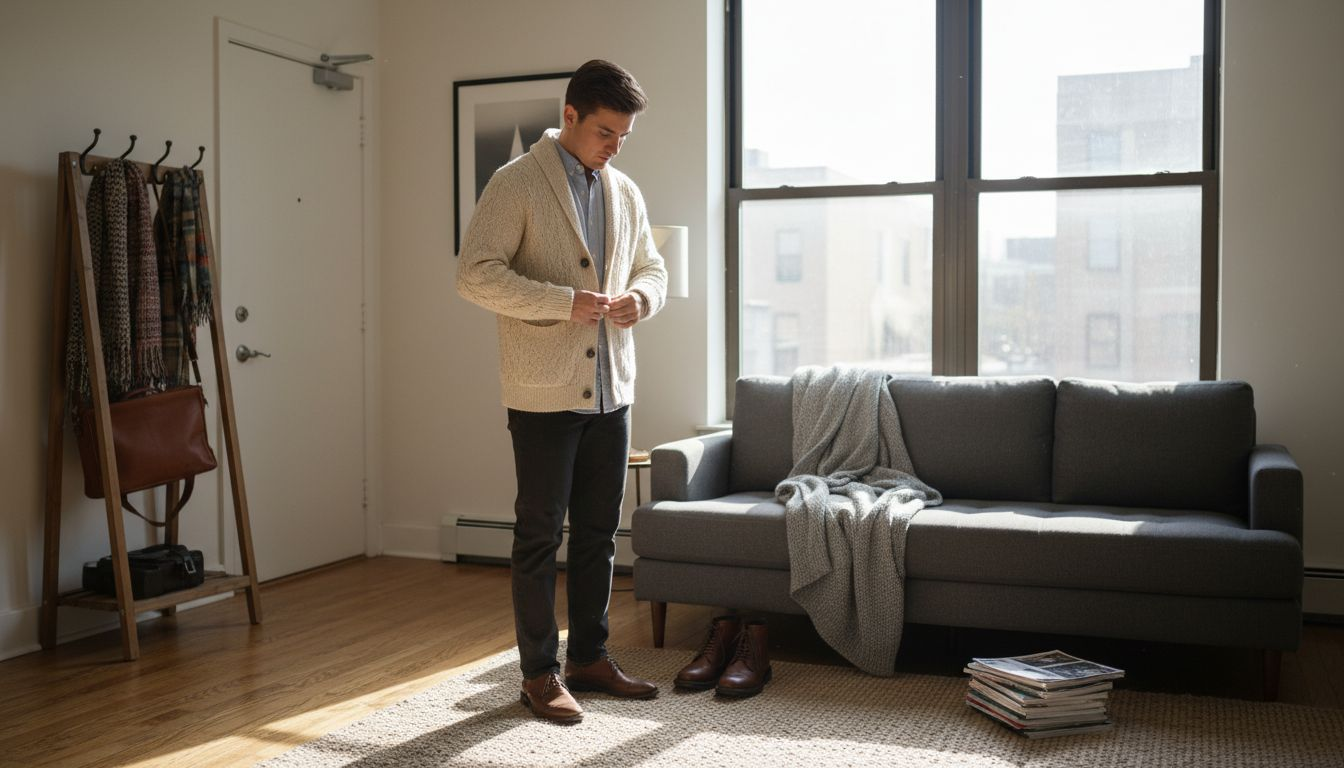
Versatility also means sustainability—pieces that work harder in your wardrobe last longer and actually get worn. A versatile sweater isn’t just convenient; it’s economically and environmentally smarter.
Gender-neutral styles expand what’s possible, letting everyone access the comfort and adaptability knitwear offers without style limitations.
Pro tip: Choose knitwear in neutral base colors and quality fabrics—these pieces become your wardrobe foundation, pairing easily with everything from jeans to dress trousers, and lasting through multiple seasons without looking dated.
Sustainable Knitwear and Handmade Appeal
Sustainability in knitwear isn’t marketing jargon—it’s a fundamental shift in how pieces are created and consumed. For professionals who care about where their clothes come from, this matters deeply.
Why Sustainable Knitwear Matters
Traditional mass-produced knitwear wastes resources at every stage: excess yarn, energy-intensive manufacturing, and garments that fall apart after a season. Sustainable knitwear flips this model by using responsibly sourced natural fibers and production methods that minimize environmental damage.
[Digital knitting technology] enables zero-waste production, dramatically reducing the material lost during manufacturing. Localized production also cuts transportation emissions significantly compared to garments shipped across continents.
The environmental benefits add up:
- Natural fiber sourcing: Wool and cotton grown sustainably require fewer chemicals
- Zero-waste construction: Precision knitting eliminates leftover yarn scraps
- Energy efficiency: Modern machines use less electricity than traditional methods
- Durability: Quality sustainable pieces last longer, meaning fewer replacements
The Handmade Appeal
Handmade knitwear carries something mass production can’t replicate: uniqueness and intention. When you wear a handmade sweater, you’re wearing someone’s skill and attention to detail.
Handmade knitwear preserves ancient craftsmanship traditions while supporting ethical labor practices and creating garments built to last decades.
Handmade pieces also promote social responsibility. Artisanal production supports communities, maintains cultural heritage, and ensures fair wages for skilled workers. This connects you to the people who created what you’re wearing.
Balancing Tradition with Innovation
Sustainable knitwear isn’t about choosing between old and new—it’s about fusion. Artisanal techniques merge with digital precision to create pieces that honor craftsmanship while delivering consistency and quality.
A handmade element might be a hand-finished collar or custom details, combined with precisely engineered construction. This approach enhances durability and creates garments that actually improve with age rather than falling apart.
Brands that champion this approach prove that ethics and quality aren’t expensive luxuries—they’re smart investments in pieces that work harder in your wardrobe.
Pro tip: Ask about fiber sourcing and production methods before buying—handmade or artisanal knitwear from brands with transparent supply chains typically outlasts mass-produced alternatives by years, making the higher upfront cost genuinely economical over time.
Knitwear vs. Other Streetwear Choices
When building a streetwear wardrobe, knitwear holds a unique position. It’s not just another piece—it’s a foundation that works differently than graphic tees, jackets, or other staples. Understanding these differences helps you invest strategically.
What Makes Knitwear Different
Knitwear combines two things simultaneously: the fabric surface AND the garment shape. Unlike woven streetwear pieces where fabric and cut are separate concerns, [artistry and technical manufacturing] merge in knitwear design. A sweater’s texture, drape, and fit all come from the knitting process itself.
This duality requires collaboration between designers and technicians. You’re not just getting a piece of fabric shaped into a garment—you’re getting a structure engineered from yarn up. This explains why quality knitwear feels different and lasts longer than comparable woven options.
Identity Expression Through Knitwear
Streetware culture values identity expression and brand storytelling. Consumers seek garments that communicate internal beliefs and social affiliations. Knitwear plays this role effectively because it reads as both intentional and personal.
A handmade cardigan or textured sweater signals different values than a graphic hoodie. Knitwear suggests craftsmanship, attention to detail, and thoughtfulness—qualities that resonate with professionals who care about what their clothing says about them.
Unlike mass-produced graphic tees, knitwear pieces become conversation starters about quality and sustainability.
Comfort, Durability, and Long-Term Value
Other streetwear pieces prioritize impact—bold graphics, statement cuts, limited drops. Knitwear prioritizes wearability. You’ll reach for your favorite sweater hundreds of times across seasons because it adapts, performs, and improves with age.
Consider the practical differences:
For quick reference, here’s how knitwear compares to other streetwear staples:
| Garment Type | Durability | Versatility | Wardrobe Longevity |
|---|---|---|---|
| Knitwear | High, resists wear | Adaptable, multi-season | Lasts for years |
| Graphic Tees | Fades quickly | Trend-driven | Short lifespan |
| Hoodies | Prone to pilling | Limited use | Replaced frequently |
| Jackets | Varies by material | Seasonal, layering | Depends on care |
- Graphic tees: Fade after washing; trend-dependent; short lifespan
- Mass-produced hoodies: Pill and stretch out; limited versatility
- Quality knitwear: Withstands years of wear; works across multiple seasons; pairs with countless outfits
Knitwear’s technical construction and durable materials make it streetwear’s investment piece—something you own for years, not seasons.
Where other streetwear items eventually look worn or dated, quality knitwear develops character and patina. A wool sweater from five years ago still looks intentional and current.
This difference matters for your wardrobe efficiency. Building around quality knitwear basics means fewer total pieces and more actual outfit combinations.
Pro tip: Build your streetwear foundation with quality knitwear basics first, then layer graphic pieces and statement items around them—this approach creates more outfit possibilities while spending less overall.
Discover the Perfect Blend of Comfort and Style with Urushadze Brand Knitwear
The challenge of finding knitwear that combines lasting comfort, sustainable craftsmanship, and modern streetwear style is real. This article highlights the importance of fiber composition, fully fashioned construction, and sustainable production to ensure your knitwear fits perfectly, feels great, and stands the test of time. At Urushadze Brand, we understand these needs and deliver a curated selection of handmade and thoughtfully designed knitwear that adapts to your lifestyle while embracing ethical standards.
Experience the difference quality knitwear can make in your wardrobe today. Explore our collection of handmade hoodies and knitwear that offer exceptional fit, breathable fabrics, and timeless style created for professionals and streetwear enthusiasts alike. Don’t settle for mass-produced pieces that fade or lose shape quickly. Visit Urushadze Brand now, and redefine your comfort and look with garments engineered to last and impress. For a closer look at our unique designs, check out our assortment of handmade hoodies and casual apparel crafted for versatile wear and enduring fashion.
Frequently Asked Questions
What is knitwear and how is it different from woven textiles?
Knitwear is made from a single continuous yarn that forms interlocking loops called rows, as opposed to woven textiles that interlock two sets of yarns. This structure allows knitwear to be more breathable and comfortable against the skin.
What are the benefits of fully fashioned knitwear?
Fully fashioned knitwear is engineered at the knitting stage for a better fit, reducing fabric waste and ensuring that items fit properly and last longer than those cut from larger pieces.
How does the fiber composition affect the performance of knitwear?
The fiber composition influences properties like elasticity, warmth, and overall appearance. For instance, a 100% wool sweater will have different draping and durability compared to a wool-acrylic blend, impacting how it wears over time.
What makes sustainable knitwear a better choice?
Sustainable knitwear uses responsibly sourced natural fibers, minimizes environmental damage through precision manufacturing, and promotes durability, meaning these garments last longer and require fewer replacements, making them an eco-friendly option.